Wednesday, January 4, 2017

Beautiful Owl Baby !

This is one of the cutest owl babies I have seen in a while. Wish I had one just like this one now to pet and play with it ^_^:


I found this photo here. Unfortunately the link is invalid and I can't credit the original author. The description of the photo reads: "owl named Shu By Averina Olesya - Bear Pile". If you know where this photo came from please leave a comment!

Monday, December 5, 2016

Thursday, December 1, 2016

Scariest Looking Shark: Goblin Shark

Meet the goblin shark, the scariest looking shark ever!

Scientifically described as Mitsukurina owstoni, it is a rare species of deep-sea shark. It is a "living fossil", and comes from an old lineage some 125 million years old. Invididuals can be found the upper continental slopes, submarine canyons, and seamounts throughout the world at depths greater than 100 m (330 ft), with adults found deeper than juveniles. Click here for more info


Cute Red Pandas Are Cute XD

This is one of the cutest animal pics I have seen in a while.. Omg.. I just love red pandas !

Wednesday, November 23, 2016

Video: The Beautiful Clouded Leopard

Meet the the beautiful clouded leopard:


Such a majestic creature. The Clouded Leopard is a species that lives in the trees of Southeast Asia. Unfortunately, since 2008 this beautiful cat is classified as Vulnerable by the International Union for Conservation of Nature (IUCN). The total population is suspected to be fewer than 10,000 mature individuals, with a decreasing population trend, and no single population numbering more than 1,000 adults. Let's hope that it manages somehow to thrive again. It would be a pitty if it goes extinct..


How To Make Cool Pet ID Tags

handmade pet tags


Here's a cool DIY (do it yourself) guide I found over one of my favorite blogs. I am sure many pet owners will love!

Guide: How to make a simple pet ID tag at home

Tired of buying new pet ID tags for your dog or cat? Don't you like the ones available for purchase? Maybe you want something more personal or special? If yes, then follow the simple steps to make your very own, unique dog tag for your little buddy. The process is very quick and will take just a few minutes of your time.

All items needed for this project are simple and can be found in most households. If you don't have these materials just go to wallmart or something and buy them. 5 bucks will be more than enough to make a handful of tags:
  • Printing paper 
  • Printer (go to a friend if you don't have one)
  • Scissors
  • Jump rings 
  • Sticker roll

Now, the first thing you wanna do is find a cool picture, emoji or something else you want to be on the id tag. The options are limitless. You can put a fancy logo, a catch-phrase or whatever. Or you can make a combination, like a cool image along with your pet's name in 3D text. There are many online free tools that can help you with that. Just do some googling.

Once you are done it's time to open the image-logo-whatever with MS Paint (or anyother picture editing software) and add the basic details about your pet. Name, contact number and adress are more than enough. Don't forget to experiment with the various fonts if you want to get even better results. Now it's time to print your project. It might come up too big or too small. Just resize it until you get the proper...size. 

Use your scisors (or a cutter) and cut the paper. Now dress the piece of paper with sticker roll. This will make it water proof and more durable to time. Now just  put a jump ring around the paper and your very DYI pet tag is ready for use!

very cool pet tags


Did you try to make a dog tag using the guide above? How did it come out? Post a picture or leave a comment :)

Tuesday, November 8, 2016

Seal Rapes Penguin, OMG!

Sometimes nature can be very very very scary.. Did i say very enough?

Wednesday, November 2, 2016

Cute Leopard Cubs

If the cute kitten video I posted an hour ago wasn't enough for you...here's another! Here are some newborn leopard cubs. This is what I mean by cuteness overload!!!!

Cute Kittens Compilations (Videos)

My heart melted watching this video <3 By the way, am I the only weirdo outhere that wants to squeeze them really hard? I mean I am not doing it, I know how fragile they are... But for some reason I just want to squeeze them so muchhhhh!

Friday, October 23, 2015

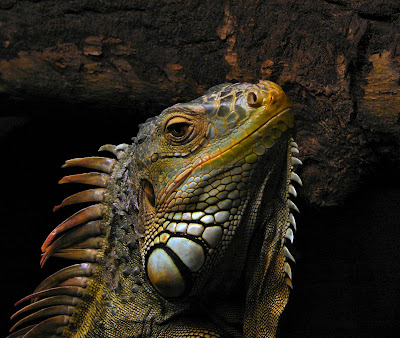
Iguana at home


Along with chameleons, another popular form of exotic pets are iguanas. Iguanas are on the list of the Convention on International Trade in Endangered Species of Wild Fauna and Flora, CITES (CITES). Therefore, when buying, be sure to require the seller of the pet store a copy of the resolution of CITES.

Iguanas grow up to 1.5-2 meters in length and can live 15-20 years. This animal is a large lizard, which feeds on plant food, and live trees. In the wild, iguanas live in Central and South America.

They have a calm character, quite livable – that’s why they have become popular exotic pets. To keep the iguana at home takes a lot of money and effort, so before you start an iguana, you should carefully consider all.

The first thing you need for keeping iguanas at home is a terrarium. It should be quite a decent size, because the animal must be free to move around on it. Cage should be equipped with a special lamp, which will provide the necessary duration of daylight, a heater to maintain the optimum temperature, a humidifier and a UV lamp.

The cage needs a branch, upward, to the lamp that the iguana can crawl, choosing the best place for itself. The temperature in the terrarium should range from 25 to 35 ° C.


The cage should also have a bowl of water, occupying at least 25% of the floor. From this bowl, the iguana can drink and it also allows you to maintain a minimum level of humidity. At the bottom of the cage you should put a plastic mat -  a layer of paper napkins or towels (but not newspapers), and on top of napkins you should evenly spread out a plate of oak bark.

You should clean your pet regularly in warm water. Bathing is useful for iguanas, because while swimming iguanas are actively moving, molting is easier and faster, iguana skin receives the necessary moisture. You can bathe an iguana in a normal bath, put some pre-subject, on which an iguana at will be able to get out of the water. Water temperature for swimming – 30-35 ° C.

In nature, iguanas feed on plant food. There are also cases where the iguanas eat insects, small rodents, carrion. But at home it is better not to carry out experiments and feed your iguana only vegetable foods. It is also advisable to include vitamin and mineral supplements.

Experts recommend for iguanas a varied menu, which consists of 80-90% of greens and vegetables such as cabbage, beans, carrots, sweet potatoes, dandelion leaves, parsnip, alfalfa, lettuce, etc.  These animals can be trained to take food from your hands

Monday, December 29, 2014

7 weird facts about the platypus


The platypus is probably the world's weirdest mammal. Why? Hmmmm... let's see!

1. Crazy Hybrid
It looks like a crazy scientist mixed together a duck, an otter and a beaver

2. ElectroreceptionIt is only one out of the three known mammals that can sense the electrical fields produced by other organisms. The other two are the closely related echidna and the Guiana dolphin (Sotalia guianensis

3. Egg-laying
It's a mammal. It lays eggs. Enough said.

Platypus Egg

4. Venom !
One of the handful of mammals to produce egg. According to wikipedia:

It is one of the few venomous mammals, the male platypus having a spur on the hind foot that delivers a venom capable of causing severe pain to humans. 

5. Walks funny
Just check this video


6. It has no breasts!
Like all mammals, the female platypus feeds milk to its young. However, the mother doesn’t actually have tits at all! Females produce milk, but their mammary glands don’t protrude with nipples as we would expect. Instead, the areolae act as “milk patches,” which secrete milk much like human skin secretes sweat. The babies drink the milk straight from the mother’s skin!

7. No one knows the plural form of "platypus"
Some say it's platypuses. Some say it's “platypi”. Others say the name platypus is actually of Greek origin, and thus it should be “platypodes.”. Who knows...Who cares :D

Biology of barnacles

AnatomyIn the familiar barnacles the antennae are used as an attachment organ and there are six pairs of thoracic legs. The body is surrounded by pairs of fixed calcareous plates and is protected by another pair of plates which close the opening. Barnacles are divided into two groups: the acorn barnacles (Balanomorpha) in which the plates attach directly to the rock, and goose barnacles (Lepadomorpha) which are attached on the end of a stalk.


ReproductionSurprisingly, the sexes of barnacles are separate, males having proportionately probably the largest penis in the animal kingdom. It reaches out of the shell and transfers its sperm to a female neighbour. After fertilisation the female barnacle broods its eggs until they hatch as a minute cypris larva which swims until it is ready to settle head-down on a suitable surface.

Parasitic Barnacle RelativesThe parasitic forms attach themselves to other animals. Rhizocephalans, for example, invade the tissues of crabs and other crustaceans and become visible only when a grotesque egg-sac forms under the abdomen of the host. Ascothoracican barnacles attach to echinoderms or corals. Acrothoracicans bore into coral or the shells of molluscs. Most are so bizarre that they are recognisable only as barnacles because they have the same larva, called a cypris.

Ecology All barnacles live only in marine environments but many live in the intertidal region so spend part of their day without sea-water around them. During this time they do not feed or do anything except try to keep moist. Adult acorn barnacles live attached to rocks and other hard surfaces often in dense colonies. Some are specialists attaching themselves to turtles or whales. Many coastal species grow no more than a few millimetres tall but some deep-water species are 80 mm. A net of six pairs of long legs and cirri, protrudes from the cavity in which the animal lives and sweeps through the sea water to filter microscopic planktonic cells for food.

DistributionBarnacles live on hard surfaces at all latitudes at all depths from the intertidal zone to the deep sea.

the above info was archived from https://web.archive.org/web/20070217160059/http://www.museum.vic.gov.au/crust/barnbiol.html

Sunday, December 14, 2014


A penguin is a type a bird that cant fly.they are comenly hunted by leopard seals they are a big predator.you can commonly find them in antartica.

They hunt many different types of fish.they also love to slide on there stomach.they are also very good swimmers.people say it looks like there wearing little tuxedos.when they mate and get there egg they carry it between there legs.

Their head is all black with a white ring around their eye. They have long tail feathers that drag on the ground when they walk.They have a white belly and a black back. Feathers cover most of the short beak.they dont drink water they just eat snow.

Tigers


Tigers are in the cat family these cats really like swimming strangely they are black striped the rest is orange. they do not like to get hot and if they do they go sit in rivers,streams,lakes,ect.

They are the biggest in the cat family they can run up to 40 mph.they usually hunt alone at night time. Tigers, lions, leopards, and jaguars are the only four cats that can roar. A tiger can roar from 2 km away.In zoo's Tigers live to about 25 years but in the wild the average age is 10 years.

The Tiger is not a fast runner and like most cats it stalks silently towards its prey. One bite in the throat or the back of the neck is enough to kill a deer. Tigers roar to defend its territory or to call its mate or cubs.The collective name for a group of Tigers is a streak.

And here's a photo of an albino tiger


Bottle Nose Dolphins


The bottle nose dolphin is a mammal that lives under water, they can swim around 250m under water without breathing.

They are very fast and they could get away from a shark in seconds.they are also really really smart. they usually live in the wild for 16to17 years.they can see very well and there hearing is 10 times better then a humens. They can hold there breath for 15 minutes.

Dolphins are warm-blooded.Dolphins eat fish and squid and they live in salt water and seawater.Like giant pandas, you can also adopt them animal with WWF.

Giant Pandas


A panda is a type of bear sometimes referred to a panda bear.

There is only 1600 giant pandas left in the world. a pandas diet is 99% bamboo 1% apples.they are very distinctive because they have black ears,nose,arms and legs the rest is white. they might look very cuddly but a baby panda is probably stronger then you.They usually mate between march to may.there is 600 in reserves 1000 in the wild.A panda normally eats 12 hours a day.pandas are ofenly eating very relaxed with there legs stretched out .they look very lazy but really there good swimmers and great climbers.

There a mammal they way about 300lb or 136kg They 4ft to 5ft tall.A panda takes 28 pounds (12.5 kilograms) of bamboo a day.They live in the high mountains of china which is about 13000 feet,3960 meters.You adopt this animal with WWF. I have why dont you :)

Quick Animal Facts

Quick-Animal-Facts is a blog with short and interesting facts about various animals. I hope you enjoy it :)